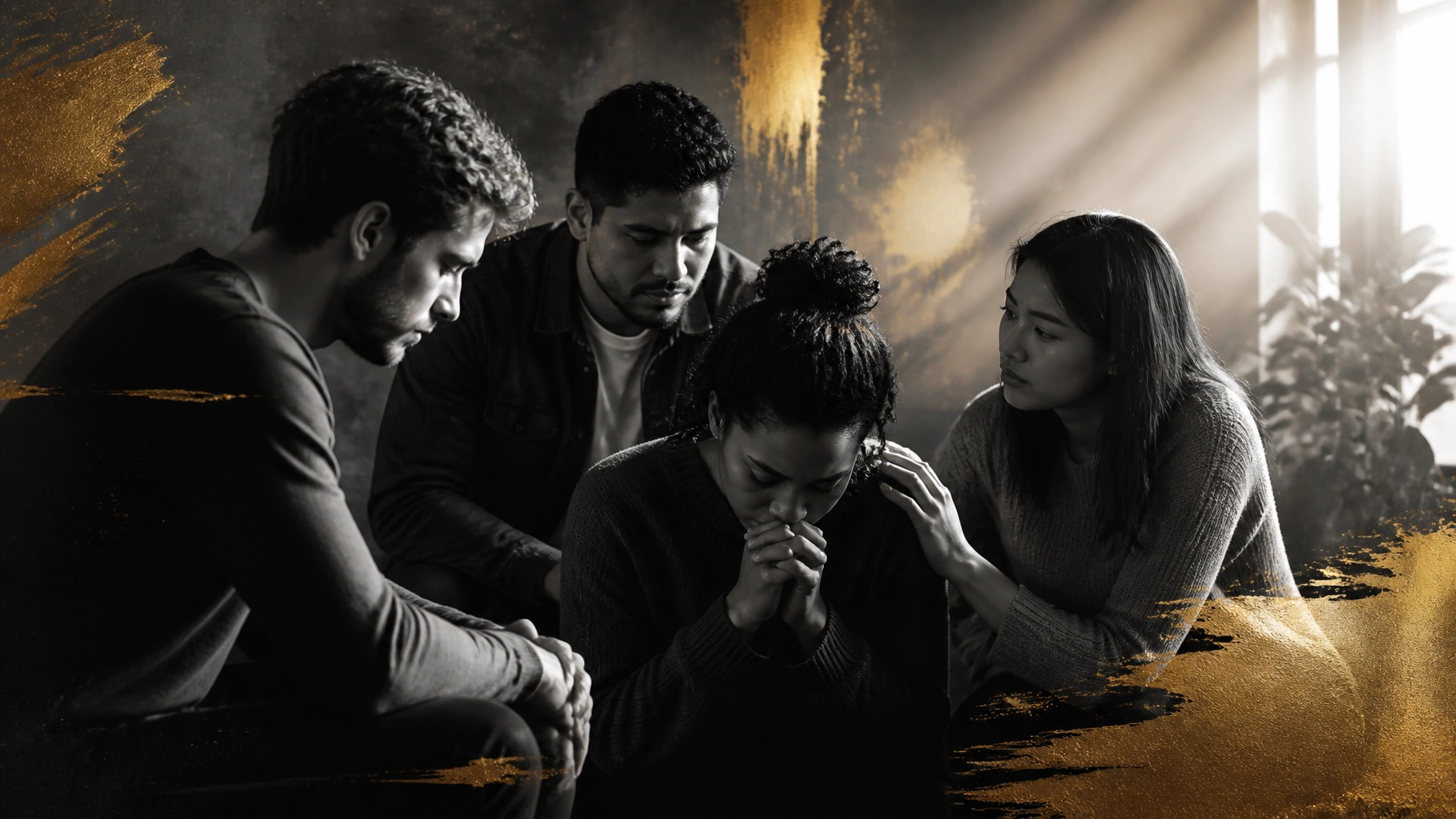
Failure can feel louder than truth.
You miss the goal, make the wrong decision, lose a job, break someone’s trust, or fall back into an old habit. Then shame begins to speak:
I should have known better.
I am behind everyone else.
God must be disappointed in me.
Maybe I am not who I thought I was.
If you have asked, “What does God say about me when I fail?”, Scripture gives a steady answer: your failure may be serious, painful, and worth addressing, but it does not have the final word about who you are.
For those who belong to Christ, identity is not built on perfect performance. It is grounded in God’s grace, Christ’s righteousness, and the promise that God does not abandon His people when they stumble.
God says you are not condemned in Christ
One of the clearest promises in Scripture is found in Romans 8:1:
“There is therefore now no condemnation for those who are in Christ Jesus.”
, Romans 8:1
This does not mean failure does not matter. It means condemnation is not your permanent identity or your final spiritual verdict.
Condemnation says, “You are hopeless. Hide from God. Nothing can change.” The gospel says, “Come into the light. Receive forgiveness. Let God restore you.”
You may have failed, but you are not a failure. You may have made a sinful choice, but you are not beyond redemption. You may have missed an important goal, but your value has not decreased.
Your identity in Christ is deeper than your latest result.
The Christianity.com discussion of failure explains that God sees the failures of His people, but He sees them through the finished work of Christ. That changes how you respond. You do not have to pretend the failure did not happen, but you also do not have to believe it defines your entire life.
God says you are still loved
When you fail, you may feel disqualified from God’s love. You might avoid prayer because you are embarrassed, or stop reading the Bible because you assume God is frustrated with you.
But God’s love is not a reward for your best days.
Romans 5:8 says:
“But God shows his love for us in that while we were still sinners, Christ died for us.”
God did not begin loving you when you became successful, disciplined, emotionally healthy, or spiritually mature. His love moved toward you while you were still in need of grace.
That means a hard day does not cancel your relationship with Him.
You are still invited to pray. You are still welcome in God’s presence. You are still capable of growth. You are still held by the One who knows every weakness and has not walked away.
Psalm 145:14 says:
“The LORD upholds all who are falling and raises up all who are bowed down.”
Notice the tenderness of that promise. God does not merely watch you struggle from a distance. He upholds and raises those who are falling.

God says your failure is not the same as your identity
A mistake is something you did. It is not the complete definition of who you are.
You might say:
- “I failed that exam,” rather than “I am stupid.”
- “I handled that conversation poorly,” rather than “I ruin every relationship.”
- “I missed my goal,” rather than “I will never become anything.”
- “I sinned,” rather than “I am permanently rejected.”
This is not positive thinking. It is a biblical distinction between behavior and identity.
The Bible does not hide the failures of its heroes. Moses acted in anger. David committed serious sin. Peter denied Jesus. Paul persecuted Christians before becoming an apostle. Yet God’s purpose was not finished with any of them.
Their failures became part of their stories, but not the whole story.
Proverbs 24:16 says:
“For the righteous falls seven times and rises again.”
The righteous person is not described as someone who never falls. The difference is that they rise again by God’s grace.
God says shame does not have to control you
Healthy sorrow can lead you toward repentance and change. Toxic shame pushes you away from God and convinces you that hiding is safer than honesty.
Guilt says, “What I did was wrong.”
Shame says, “There is something wrong with me, and I can never change.”
God may lovingly bring conviction, but He does not use shame to destroy you. He exposes sin so that He can heal, forgive, and restore.
First John 1:9 gives this invitation:
“If we confess our sins, he is faithful and just to forgive us our sins and to cleanse us from all unrighteousness.”
Confession is not groveling for permission to be loved. It is agreeing with God about what happened and trusting His promise to forgive.
You can tell God the truth:
“Lord, I was wrong.”
“I hurt someone.”
“I acted out of fear.”
“I ignored what I knew was right.”
“I am disappointed in myself.”
“I need Your help to change.”
You do not need impressive words. You need honesty.
As BibleTruths explains in its reflection on failure, God’s response to failure is not to pretend it never happened, but to look beyond the failure toward the person He is continuing to form.
God says you can begin again
Grace is not only God’s kindness toward your past. Grace also gives you strength for your next step.
After failure, you may want to fix everything immediately. You may create an unrealistic plan, make dramatic promises, or try to prove that you are not the person who failed.
But starting again usually begins with something smaller:
- Send the apology.
- Ask for wise counsel.
- Make the next responsible decision.
- Return to a healthy routine.
- Open your Bible for five quiet minutes.
- Write down what you learned.
- Set one honest goal for today.
- Ask someone trustworthy to walk with you.
You do not have to rebuild your entire life in one day.
Philippians 3:12–14 shows Paul pressing forward without pretending he had already arrived. Christian growth is not about proving that you never struggle. It is about continuing to follow Jesus when you do.
This is where christian goal setting can become more than a productivity exercise. Your goals can be shaped by prayer, wisdom, character, and faithfulness, not only by achievement. A missed goal may reveal that you need a better plan, healthier boundaries, more support, or a different direction.
Failure can become information without becoming your identity.

Five practical steps for receiving grace after failure
1. Name what happened without exaggerating it
Write down the facts. What did you do? What was outside your control? Who was affected? What needs to be repaired?
Avoid words such as “always,” “never,” and “everything.” Shame speaks in extremes. Wisdom speaks clearly.
2. Confess what belongs to you
If you sinned, confess it to God. If you harmed someone, take responsibility without making excuses. A sincere apology does not demand immediate trust or forgiveness from the other person. It simply tells the truth and accepts responsibility.
3. Receive God’s forgiveness
Do not keep punishing yourself to prove that you are sorry. Christ’s sacrifice is not improved by your ongoing self-hatred.
Ask God to help you believe what He has promised: forgiveness, cleansing, and restoration.
4. Learn from the failure
Ask:
- What warning signs did I ignore?
- What belief influenced my decision?
- Where did I need support?
- What boundary or habit could help next time?
- Is there someone I need to invite into this process?
Learning from failure honors the experience without worshiping it.
5. Take one faithful next step
Do not wait until you feel confident. Courage often comes after obedience, not before it.
Choose one action that moves you toward healing, responsibility, and faithfulness. Then take the next step after that.
What does God say about me when I fail?
God says:
- You are not condemned in Christ.
- You are still loved.
- You are invited to come honestly into His presence.
- You can receive forgiveness and cleansing.
- You are not defined by your worst moment.
- You are not abandoned while you grow.
- You can rise again.
- Your story is not over.
This is the heart of faith based life coaching and spiritual growth: learning to view your life through God’s truth rather than through shame, comparison, or performance.
A Christian life coach, pastor, mentor, or trusted friend can help you identify patterns, set wise goals, and practice grace in real life. Support does not mean you lack faith. God often brings healing through people who listen, pray, encourage, and tell the truth with love.

A prayer for hard days
Father,
I failed, and I am tempted to believe that my failure is who I am.
Help me see myself through Your truth.
Thank You that there is no condemnation for me in Christ.
Give me courage to confess what I need to confess, repair what I can repair, and learn what You want to teach me.
Help me receive Your forgiveness instead of hiding in shame.
Lead me in one faithful next step.
Remind me that I am still loved, still held, and not abandoned.
Amen.
When you fail, God does not say, “You are finished.”
He says, “Come to Me.”
Your mistake may be part of your story, but it is not the name God has given you. In Christ, you are forgiven, loved, and being made new. Grace does not erase the need to grow. It gives you a safe place from which to begin again.
This article draws on Scripture and Christian teaching, including reflections from Desiring God on how God forms us through failure and Tabletalk Magazine on failure and disappointment.
Leave a Reply